
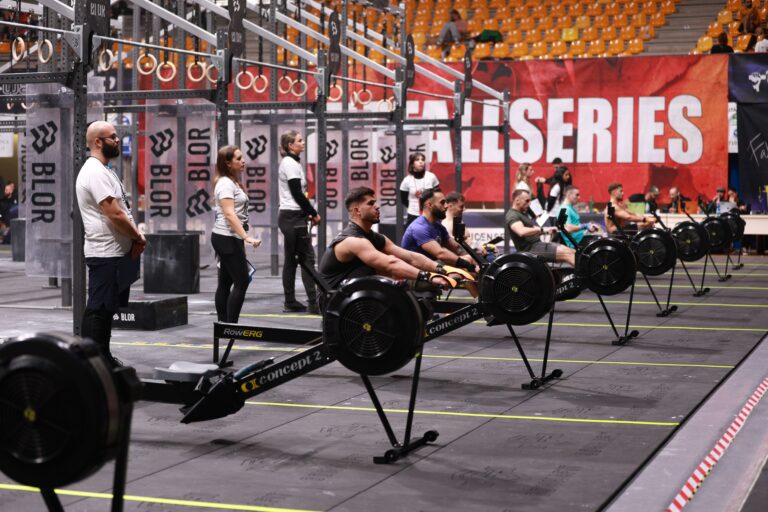
Built for Strength. Trained for Endurance.
Running. Strength. Endurance. Power. Hybrid training asks your body to do it all.
Whether you’re preparing for a HYROX competition, participating in functional fitness events, or combining running with strength training, your body needs to handle different types of physical stress, often within the same workout.
At Altius Physical Therapy, we work with athletes who want to train consistently, recover from injuries, and return to the activities that challenge them. We understand that for hybrid athletes, rehabilitation isn’t just about getting back to lifting or running. It’s about being able to do both.
Hybrid athletes combine endurance training with strength, power, and functional movements.
For example, a HYROX race involves eight 1-kilometer runs, each followed by a functional workout station. Athletes alternate running with exercises such as sled pushes, sled pulls, burpee broad jumps, rowing, farmer’s carries, sandbag lunges, and wall balls.
Other athletes may participate in CrossFit-style workouts, functional fitness competitions, or training programs that incorporate both distance running and weightlifting.
These activities challenge cardiovascular fitness, muscular endurance, strength, mobility, and the ability to perform demanding movements under fatigue.
The challenge isn’t always one particular exercise. It’s often the cumulative training load from balancing multiple disciplines while allowing enough time for recovery.
Combining running, strength training, and repetitive functional movements can place significant demands on muscles, tendons, and joints, particularly when training volume or intensity increases quickly.
Some of the conditions we evaluate and treat include:
Patellofemoral pain and other running-related knee injuries
Achilles and patellar tendinopathy
Shin splints and lower-leg pain
Hip pain and muscular strains
Low back pain associated with lifting and repetitive loading
Shoulder pain during pressing, pulling, and overhead movements
Ankle sprains and instability
Overuse injuries associated with changes in training demands
These injuries aren’t unique to HYROX or hybrid training. What matters is understanding the demands of your workouts and identifying the factors that may be contributing to your symptoms.
Treating a hybrid athlete requires understanding both the endurance and strength components of their training.
Your evaluation goes beyond the painful area. Depending on your injury and goals, we may examine:
Strength and muscular endurance
Joint mobility and movement control
Running mechanics and training volume
Squatting, hinging, lunging, and other functional movement patterns
Single-leg stability and lower-extremity control
Tolerance for repetitive activity and resistance training
Recent changes in workout intensity, frequency, and recovery
We’ll also discuss your actual training routine.
Are you increasing running mileage while maintaining heavy lifting sessions? Experiencing knee pain during lunges or wall balls? Struggling with Achilles discomfort after a combination of running and sled work?
Those details help us understand what your rehabilitation needs to address.
Treatment may include hands-on manual therapy, progressive strengthening, mobility exercises, movement retraining, and modifications to training load.
Our goal is to help you rebuild the capacity needed for your training, not just eliminate symptoms during everyday activities.
For athletes who train consistently, being told to stop everything can be frustrating.
Whenever clinically appropriate, we look for ways to modify training rather than eliminate it entirely.
That might mean temporarily reducing running mileage, changing exercise intensity, adjusting resistance, or substituting certain movements while an injury improves.
Other injuries require more significant restrictions or a period away from specific activities. We’ll help you understand those decisions and develop a progression based on your condition and goals.
Rehabilitation should prepare you for the activities you want to return to.
For a hybrid athlete, that may mean rebuilding running tolerance while progressively restoring strength, power, and the ability to handle repeated movements under fatigue.
Feeling better during everyday activities doesn’t necessarily mean you’re ready for full-intensity training or competition.
Depending on your injury, we may assess and progress your tolerance for:
Running at increasing distances and intensities
Repeated squatting and lunging
Pushing, pulling, and carrying loads
Plyometric exercises and landing mechanics
Higher-repetition strength training
Combining strength and endurance demands
An athlete preparing for a HYROX competition may need to tolerate running immediately after demanding strength-based stations. Someone returning to recreational hybrid training may have a different set of goals.
Your rehabilitation should reflect those differences.
For athletes interested in understanding their running mechanics, our Runner’s Lab provides a dedicated evaluation of running gait, strength, and mobility.
You can also learn more about our approach to sports injury rehabilitation and injury prevention and performance training.
Whether you’re preparing for your first HYROX event, working toward a personal best, or simply balancing your weekly runs with strength training, we understand that your goals are personal.
At Altius Physical Therapy, we take the time to understand your training, identify limitations that may be contributing to your symptoms, and develop a rehabilitation plan based on the activities you want to return to.
Dealing with an injury or recurring pain that’s affecting your training?
Contact Altius Physical Therapy in Park Ridge, NJ to schedule an evaluation.
Altius Physical Therapy is an independent physical therapy practice and is not affiliated with or endorsed by HYROX.