
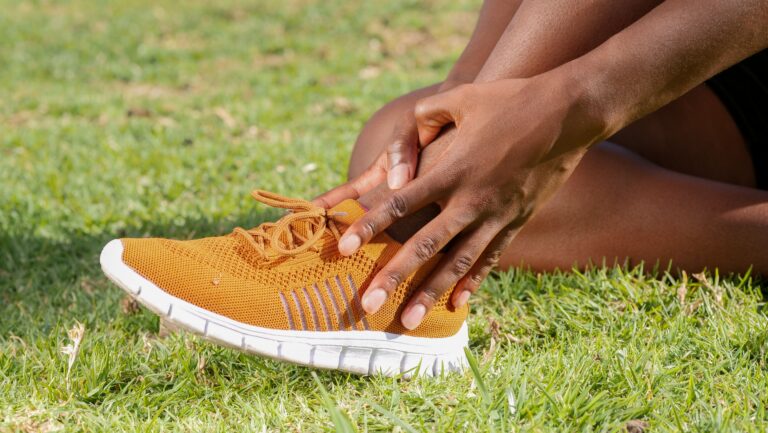
Foot and ankle pain can be particularly frustrating when it doesn’t respond to the usual treatments. Maybe you’ve tried stretching, orthotics, different shoes, or even physical therapy, but the pain keeps coming back.
At Altius Physical Therapy, foot and ankle rehabilitation is an area of particular clinical interest and experience, especially plantar fasciitis and persistent heel pain. We regularly work with patients whose symptoms haven’t responded to previous treatment, as well as those dealing with posterior tibial tendinopathy, sesamoiditis, and other challenging overuse injuries.
Our approach combines a detailed examination of foot and ankle mechanics with specialized manual therapy, therapeutic taping, and progressive strengthening. We take the time to understand what’s been tried, what’s helped, and what may have been overlooked.
Our experience includes treating a wide range of foot and ankle conditions, including:
Plantar fasciitis (plantar heel pain): Persistent heel pain, particularly with first steps in the morning or after periods of rest.
Posterior tibial tendinopathy: Pain along the inside of the ankle and foot, sometimes associated with changes in arch control and walking mechanics.
Sesamoiditis: Pain beneath the big toe joint, often aggravated by walking, running, or push-off activities.
Peroneal tendinopathy: Pain along the outside of the ankle related to irritation or overload of the peroneal tendons.
Achilles tendinopathy: Pain and stiffness involving the Achilles tendon, frequently associated with repetitive loading.
Ankle sprains and instability: Ligament injuries, recurring sprains, and difficulty with ankle stability.
Foot and ankle fractures and stress fractures: Rehabilitation following appropriate medical management and clearance for progressive loading.
Shin splints (medial tibial stress syndrome): Exercise-related pain along the shin, commonly associated with running and impact activities.
Foot and ankle stiffness or hypomobility: Joint mobility restrictions that may affect walking, squatting, running, or everyday movement.
We also treat foot and ankle arthritis, post-surgical conditions, and other activity-related injuries.
Plantar fasciitis is one of the foot conditions we have extensive experience treating, particularly when symptoms have persisted despite previous care.
Heel pain isn’t always explained by tight calves or a need for more stretching. We look at foot and ankle mobility, calf strength, walking mechanics, footwear, and how the plantar fascia responds to daily activity and loading.
Depending on the findings, treatment may include specialized foot and ankle mobilization, Low-Dye taping, progressive strengthening, and adjustments to activity or footwear.
For patients who’ve been dealing with heel pain for months, our focus is on understanding why symptoms are persisting and developing a treatment approach that addresses their individual limitations.
Not every foot injury responds to a standard exercise program. Persistent symptoms may involve a combination of mobility restrictions, tendon-loading limitations, strength deficits, training habits, or footwear considerations.
When a patient comes to us after unsuccessful treatment, we don’t assume they simply need more of the same exercises.
We look at the history of the problem, previous treatment approaches, and how the foot and ankle function under load. Sometimes that means addressing a mobility restriction, modifying how a tendon is being loaded, or using supportive taping to help manage symptoms while gradually building strength.
In other cases, persistent pain warrants further medical evaluation or reconsidering whether the original diagnosis fully explains the symptoms.
Our goal is to identify a more useful path forward, especially when previous approaches haven’t produced the progress someone expected.
Foot and ankle rehabilitation is an area where clinical experience and attention to detail can make a meaningful difference.
Our evaluation goes beyond identifying where it hurts. We examine joint mobility, strength, foot mechanics, walking and running patterns, and how the foot responds to different types of loading.
Depending on your condition, treatment may include:
Specialized manual therapy: Foot and ankle joint mobilization and targeted soft tissue techniques to address stiffness and movement limitations.
Therapeutic taping: Low-Dye taping and other supportive techniques to help temporarily modify foot loading, provide support, and manage symptoms.
Progressive strengthening: Individualized exercises targeting the foot, ankle, calf, and surrounding musculature.
Balance and proprioceptive training: Improving stability and movement control, particularly following ankle injuries.
Gait and movement retraining: Addressing walking or running mechanics when clinically relevant.
Footwear and orthotic guidance: Discussing appropriate footwear and external support based on your condition and activity demands.
We often combine hands-on manual therapy with progressive exercise rather than relying on passive treatment alone. Each treatment is selected based on what we find during your evaluation and how you respond throughout rehabilitation.
Whether you’re dealing with stubborn plantar fasciitis, recovering from an ankle sprain, or trying to return to running after an overuse injury, your rehabilitation should reflect your individual needs and goals.
For some patients, that means getting through a workday without persistent foot pain. For others, it’s returning to running, hiking, sports, or regular exercise.
For runners, we also offer running injury rehabilitation and our Runner’s Lab for a more detailed assessment of running mechanics.
Still dealing with foot or ankle pain despite previous treatment?
Contact Altius Physical Therapy or call 201-391-8932 to schedule an evaluation at our Park Ridge office.