
“My hamstrings are always tight.” “My calves never loosen up.” “My hips always feel stiff.”
We hear versions of this all the time in physical therapy, and the natural response is usually pretty simple: if something feels tight, stretch it. Sometimes that is exactly what you need. But if you have been stretching the same area for months or even years and it still feels tight, it may be worth asking a different question: does that muscle actually need more flexibility, or does it just feel tight?
Recent research has helped us understand that those are not always the same thing. A 2025 systematic review in Sports Medicine looked at what actually changes when people regularly perform static stretching. As expected, people improved their range of motion, but the muscle itself did not necessarily become significantly longer. Some of the improvement appeared to come from reduced stiffness and from becoming more tolerant of the sensation of stretch.
Read the 2025 Sports Medicine review
That matters because tightness is a sensation, not a diagnosis.
If someone tells us their calf always feels tight, there are a few different possibilities. One person may truly have limited ankle mobility and benefit from stretching or mobility work. Another may already have plenty of motion but not enough calf strength or endurance for the amount of running they are doing. Someone else may be overloading the area because of training volume, running mechanics, or limitations elsewhere in the body.
Those people are all describing the same feeling, but they may need very different treatment.
At Altius, we do not look at stretching as good or bad. We look at whether it makes sense for the problem in front of us.
Sometimes the muscle that feels tight actually needs to be strengthened, not just stretched. A 2025 systematic review and meta-analysis found that resistance training itself can improve flexibility in healthy adults.
Read the resistance-training and flexibility study
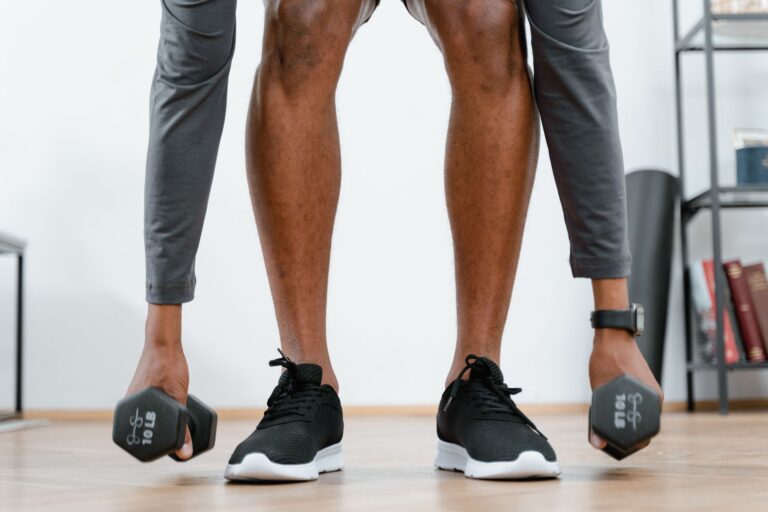
That fits with what we see clinically. Someone who is constantly stretching their hamstrings may benefit more from exercises like Romanian deadlifts that load the hamstrings in a longer position. A runner with chronically tight calves may need calf raises through a full range of motion. Someone with stiff hips may benefit from split squats or lunges that gradually expose the hip to deeper positions while also building strength.
The goal is not just to get more motion. It is to be able to control and tolerate that motion when you actually need it.
Stretching might help you gain more range, but if you cannot use that range while running, lifting, jumping, or playing a sport, the extra mobility may not solve the problem you came in with.
Stretching after exercise is another good example. A lot of people feel like they have to stretch after every workout or they will “tighten up.”
If you enjoy stretching after a workout, there is nothing wrong with it. It can feel good, and if flexibility is one of your goals, it may be useful. But it probably does not need to be treated like a mandatory recovery ritual.
A 2025 meta-analysis found that post-exercise stretching did not significantly improve soreness, strength recovery, performance, flexibility, or pain threshold compared with not stretching.
Read the 2025 post-exercise stretching review
So the point is not that stretching does not work. It does.
The point is that every complaint of tightness should not automatically lead to another stretch.
If you keep stretching the same area and it keeps feeling tight, it may be time to figure out why.
Does the area actually lack mobility? Does it need more strength or endurance? Is it being asked to handle more load than it is prepared for? Is something about your movement or training changing where stress is going?
Sometimes the answer is stretching. Sometimes it is strengthening. Often, it is a combination of both.
The important part is matching the treatment to the actual problem instead of assuming that “tight” always means “short.”
If persistent tightness is limiting your workouts, running, sports, or everyday activity, contact Altius Physical Therapy to schedule an evaluation.