
After months of ACL rehab, there’s one number many athletes hope to reach: 90%.
Achieve 90% limb symmetry on your hop tests, and you may be told you’re approaching return-to-sport readiness. But here’s the question we should be asking: The numbers look good. Does the athlete actually look ready?
A 2026 systematic review and meta-analysis found that achieving at least 90% symmetry on certain hop tests was associated with a greater likelihood of returning to sport. However, hop distance alone was not a reliable way to predict future ACL injuries.
That distinction matters.
An athlete can produce a good hop distance while demonstrating poor landing control, difficulty decelerating, or strength deficits that a symmetry percentage doesn’t fully capture.
Return-to-sport testing should look at the whole athlete, not just a single number.
90% symmetry is useful information. It’s not an automatic green light.
An athlete might achieve 92% symmetry on a single-leg hop test while demonstrating poor knee control during landing. The distance tells us something about performance, but it doesn’t tell the whole story.
Here are five areas worth examining before returning to unrestricted sport.
How an athlete lands matters. Excessive knee movement, limited hip and knee flexion, or poor trunk control may reveal movement deficits that aren’t obvious from hop distance alone.
We want to see how an athlete controls the movement, not just how far they can go.
ACL injuries commonly occur during cutting, pivoting, landing, and deceleration.
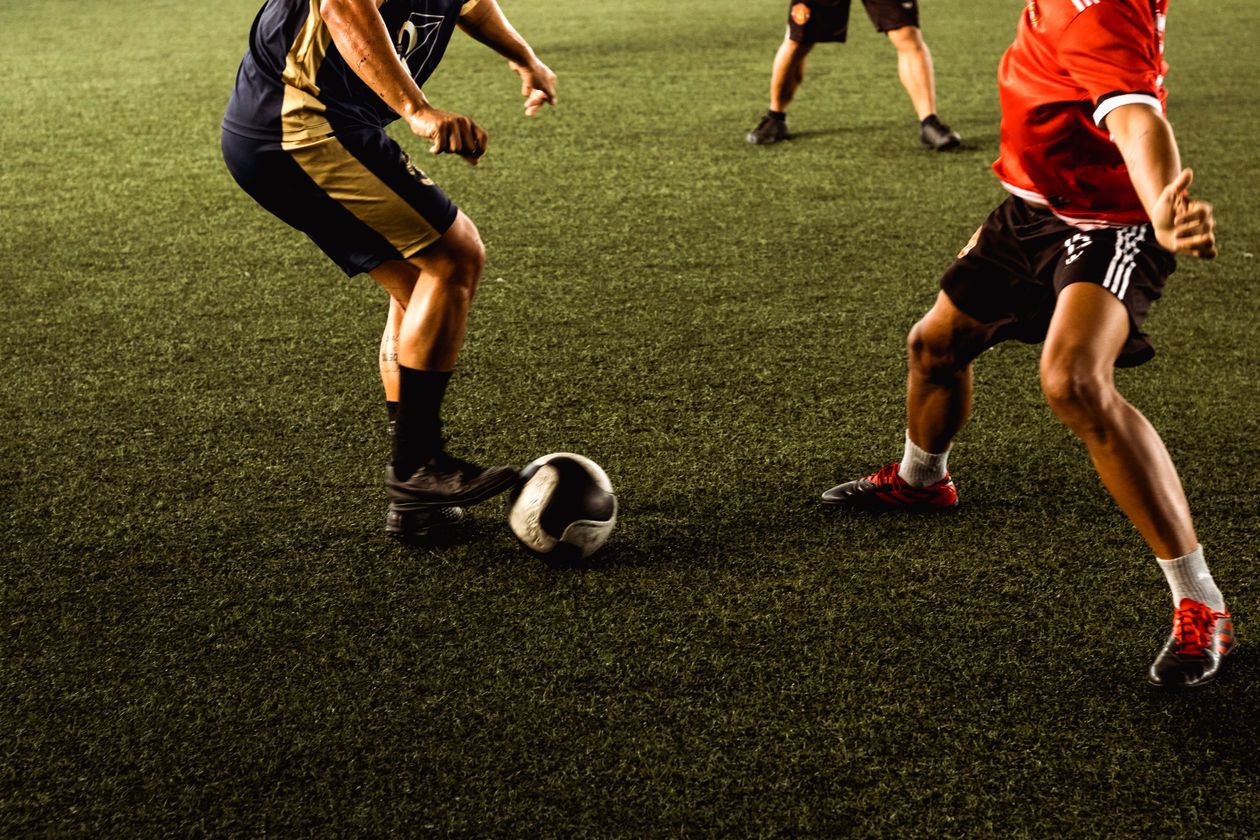
If we’re preparing an athlete to return to basketball, soccer, football, or another cutting sport, we need to assess how they stop, change direction, and respond to increasingly demanding movements.
Straight-line hopping is only part of that picture.
Limb symmetry compares one leg to the other. But what happens when both legs are weak?
An athlete may demonstrate 90% symmetry while still having meaningful strength deficits.
Quadriceps and hamstring strength, overall force production, and the ability to tolerate repeated athletic demands all deserve attention.
Being physically capable of performing a movement doesn’t always mean an athlete feels ready to perform it during competition.
Fear of reinjury, hesitation, and confidence can influence how an athlete moves and performs. Psychological readiness should be part of the conversation, not an afterthought.
A controlled clinic environment is different from a Friday night game.
An athlete returning to soccer needs to tolerate cutting, acceleration, deceleration, fatigue, and unpredictable situations. Someone returning to a different sport may face very different demands.
Return-to-sport decisions should reflect the activities an athlete actually needs to perform.
90% is information. It is not a green light.
Hop testing has value, but it belongs alongside strength testing, movement quality, psychological readiness, sport-specific progression, and consideration of healing timelines and medical guidance.
No single test can guarantee that an athlete won’t experience another ACL injury. The goal is to make a better-informed decision about readiness.
At Altius, we approach ACL rehabilitation with the demands of the athlete’s sport in mind.
Depending on the individual’s stage of recovery, treatment may include progressive strengthening, landing mechanics, deceleration and change-of-direction training, and sport-specific exercise.
We want athletes to understand what they’re working toward and why each stage of rehabilitation matters.
Returning to sport after ACL reconstruction? Contact Altius Physical Therapy in Park Ridge, NJ to discuss your rehabilitation or return-to-sport goals.